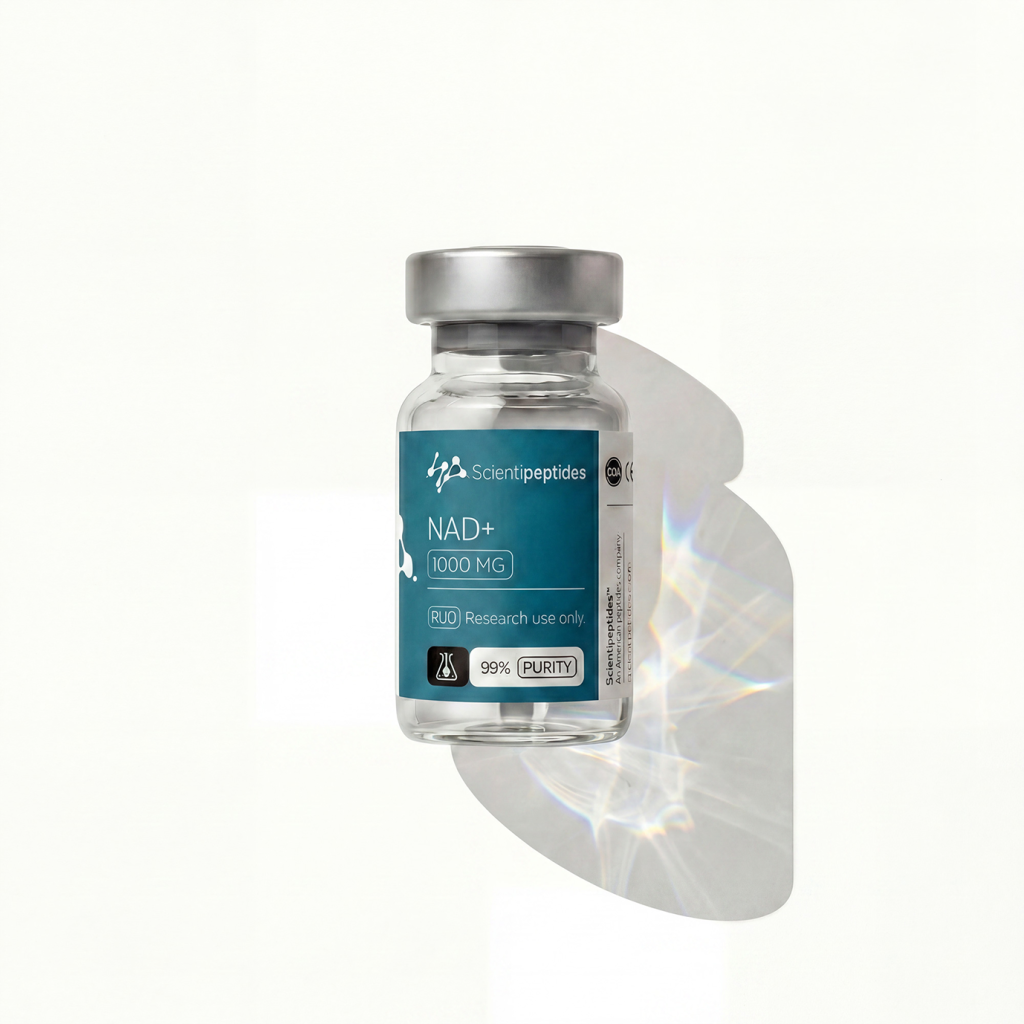
NAD+ 1000mg
NAD+ 1000mg Research Coenzyme (Oxidized Form) Redox cofactor; central to mitochondrial ATP production…
Overview
NAD+ is one of the most widely studied compounds in cellular-energy and metabolic-pathway research. It is used in laboratory models focused on mitochondrial function, DNA-repair signaling, oxidative-stress response, and overall cellular metabolism. It serves as a foundational molecule for studying cellular aging, energy-pathway regulation, and repair signaling mechanisms.
NAD+ acts as a coenzyme involved in electron-transfer processes during cellular-respiration pathways, influencing redox balance and ATP-production signaling. It also serves as a substrate for enzymes associated with DNA-repair and cellular-response pathways, including PARP and sirtuin signaling models. Variations in NAD+-associated activity have been examined in research involving mitochondrial function, metabolic aging, and cellular-efficiency signaling within controlled laboratory environments.
Specification
Availability: IN STOCK · Purity (HPLC): 99.2 % · Product type: Energy/Mitochnodrial Rejuvenation · Container: Vial · Volume: 1000mg (1g)
Potential research application
RESEARCH USE ONLY – REVIEW STUDIES: NAD+ (Nicotinamide adenine dinucleotide) is the oxidized form of NADH and a naturally occurring compound. Research shows that NAD+ may be beneficial in improving muscle function, protecting cells of the nervous system, and generally reducing the effects of aging.
Certificate of Analysis
Peptides validated with documented Certificate of analysis® for all products. See all COAs.
Third-party tested for Purity
Backed by industry-leading research and best practices. All products are fully HPLC tested for purity.
Same day delivery
Orders placed before 2pm EST (Mon–Fri) or 3pm Saturday ship the same day, using USPS for fastest delivery.
Additional information
- Availability
- IN STOCK
- Purity (HPLC)
- 99.2 %
- Product type
- Energy/Mitochnodrial Rejuvenation
- Container
- Vial
- Volume
- 1000mg (1g)
517 reviews for NAD+ 1000mg

quick reorder…
NAD+ 1000mg still cold on arrival, reorder quick & accurate.
NAD+ 1000mg LC-MS identity lined up with the sequence and batch-to-batch consistency has held across three reorders.
coa came in the box with the NAD+ 1000mg shipment, bulk tier pricing fit our study qty and international customs and docs were handled smooth.
the shipment arrived in a plain outer box with no loud branding on the outside which our admin team appreciates. Inside everything was packed neatly and the vials were easy to inventory. We have used them for a few orders now and the presentation stays professional every time!!
Plain unbranded outer box with nothing flashy on the label, exactly what we want for lab deliveries!!
They keep the hard-to-source NAD+ lots in stock when other vendors go dark. Three reorders in and every shipment matched the prior batch paperwork. That kind of consistency keeps us here.
COA lot number on the NAD+ 1000mg matched the vial label exactly on our intake check. Desiccant was included and still intact under the cap. Documentation lined up the way we expect.
Clear itemized invoice, no chaseing…
NAD+ restocks reliable storage notes clear evry time!!
Fill weight was right on the declared 1000mg qty when we logged it into inventory.
Shipment arrived w/ desiccant included and fully intact inside the outer wrap. Cold-chain packaging looked undisturbed and the vials sat at a stable temp through transit based on the gel pack condition. COA was in the box so we filed it before opening anything at the bench. Labeling was clear and the lot info matched our PO on first pass. Straightforward receipt all around, nothing left to chase…
Very good, rec'd fast.
NAD+ 1000mg support answered our documentation questions fast, pulled the exact lot COA we needed, and it has been consistent across bench assays so far…
NAD+ 1000mg arrived with solid padding nothing shifted and Scientipeptides has been a reliable lab supplier overall. Had a minor shipping hiccup once and support resolved it smoothly. Already pointed a neighboring group here.
NAD+ 1000mg had third-party testing on file, durable legible labels, and worked great as a reference standard while we built out our LC method.
NAD+ 1000mg, exactly as described.
The NAD+ 1000mg vial included clear reconstitution notes wich saved us from guessing solvent volume on the bench. Powder dissolved cleanly and the guidance matched what we saw in practice.
Ordered NAD+ 1000mg on Monday and it was on the bench by Thursday. We ran our own HPLC check against the supplier COA and the purity held. Vial was sealed tight, label matched the lot, and reconstitution went clean. Exactly what we needed without chasing paperwork.
Obscure peptides stocked, tracking sparse, box overpacked though.
scientipeptides has been a reliable lab supplier for us, orders show up documented and on time.
Insulated ship w/ gel packs held temp, glass vials feel solid and the material runs clean as a reference standard for method dev. No complaints.
Good NAD+, slower delivery.
NAD+ reorder fast, suport answered same day.
NAD+ 1000mg gave us clean blanks with no contamination carried into our LC runs.
great shipment again!!
Insulated packaging with gel packs was still cold on delivery and they answered our documentation questions within hours. Small details but they matter when you're staging downstream work.
This is our third reorder and the material has been consistent batch to batch across every lot we have pulled for controls. We run the same prep and QC steps each time and get the same baseline in our assays which is exactly what you want for a coenzyme standard. Packing and labeling look the same order after order so there is no requalification headache when a new case lands. The last box even arrived a day early which helps when we are juggling multiple peptide prep schedules at once and still trying to keep cold-chain logs clean without scrambling staff, that reliabilty has been the big win for our lab.
Tamper seals intact no issues!!
NAD+ 1000mg showed a clean chromatogram.
Stability and shelf-life data were included in the documentation packet which made it easy to slot the material into inventory without guessing storage limits. The inner box was padded well and nothing shifted in transit even though the outer carton took a corner hit, and the cold packs were still cold when we opened it. COA matched the batch label on every vial we checked. This is the kind of supplier you can put on standing order!!
The NAD+ 1000mg vial crimp and stopper seal were solid with no looseness around the cap. Net content versus gross mass was stated clearly on the label so we knew exactly what we were weighing in.
tamper-evident seals were intact on every vial we opened. COA listed molecular weight and catalog identity without us having to dig through the site.. paperwork matched what landed on the bench.
labels on the NAD+ 1000mg vials stay legible after refrigeration and it has worked well as a reference standard for our method development runs.
NAD+ 1000mg arrived w/ tamper-evident seals fully intact on every vial we checked into inventroy. Purity paperwork and lot labels matched what we expect from prior orders. There was a bit more outer packaging than the order really needed on a small restock. Still the material looked perfect and we will reorder when our current lot runs low.
NAD+ 1000mg restocks stay reliable, international shipping landed clean, and invoicing was itemized for procurement every time.
We switched our NAD+ 1000mg sourcing to Scientipeptides after too many backorders with our previous vendor and I am glad we did. Reordering has been quick every time and the correct SKU and quantity always arrive without mix-ups. Lot numbers on the labels match what shows in our inventory system and nothing gets sent to the wrong bench. For a compound we burn through on a regular schedule, that kind of accuracy is exactly what we needed.
Bulk pricing worked, seals intact. Glad we switched.
Fast turnaround, dissolved clean in bacteriostatic water with zero cloudiness, and the vial was ready for bench work the same afternoon.
COA lot number matched the vial label.
The NAD+ 1000mg order included clear reconstitution guidance in the documentation, which saved us from digging through old SOP notes. We followed their outline and everything went into solution on the first pass. Small detail but it makes a real difference when the bench schedule is packed.
Insulated box, gel packs solid..
they sent shelf-life and stability notes with the documentation which we keep on file for our SOP binder. Material has been steady across orders and we plan to restock.
NAD+ 1000mg arrived w/ gel packs and insulated packaging that held temp steady in transit.
Padding was secure and nothing shifted in transit. Used it as a reference standard for method development and our in-house analytical check lined up with the COA. Purity held on repeat runs.
NAD+ 1000mg has been consistent in bench assays and independent third-party lab testing documentation was available when we requested it.
Good NAD+ checkout was clunky though.
Our NAD+ 1000mg shipment showed up in insulated packaging with gel packs still cold to the touch. The vials were seated well and the lyophilised material looked uniform lot to lot. COA paperwork was included and matched the labels on each vial. We run this material regularly in enzyme assays and performance has been steady across the last two orders. Already added Scientipeptides to our approved vendor list for the program!!
Shipment arrived ahead of the quoted window with cold packs still firm and no receiving delays on our dock.
A carrier delay flagged the shipment as stalled for a day. Support sent a corrected tracking link and the box arrived cold and intact the next morning.
NAD+ 1000mg went into bacteriostatic water clean with excellent solubility and no particulate. Technical documentation questions got fast answers & the outer package was discreet/unbranded.
The NAD+ 1000mg hits a sweet spot on price for what our lab budget can actually stretch to.
accurate fill on the NAD+ 1000mg matched what the label stated when we weighed it in. Reconstitution guidance was included and saved us from digging through old SOP notes. We have reordered this sku a few times now and the paperwork stays consistent. Packaging has been reliable and nothing has looked off at intake. This is one of those compounds we keep on autoreorder because it makes prep days smoother.
Restocks of this hard-to-source compound have been reliable every time we needed them. Lead times were reasonable and the material arrived well packed and documented. Support answered our questions without any runaround. The invoice formatting was very basic, but everything else was solid and we are satisfied with the supplier.
Everything in the shipment arrived complete with nothing missing from the packing list. Checkout to receipt was smooth and I have already pointed a couple of colleagues here for similar reagents.
NAD+ 1000mg PO went through clean support knew the catalog.. no drama on reorder!!
NAD+ w/ low residual TFA reported, nice.
NAD+ 1000mg support answered our doc questions same day invoicing was itemized for procurement and endotoxin/sterility figures were on the COA. Exactly what we needed no runaround.
This is our third reorder and the material has behaved the same each time. Internal checks stay aligned lot to lot. No reason to look elsewhere.
I have been pointing colleagues toward Scientipeptides for NAD+ 1000mg after our last restock. The COA lot number matched the vial label exactly which made filing the batch record simple. They also keep less common research peptides available when other suppliers are backordered. Shipping was cold-packed and the outer box was plain and professional. We had the material in storage same day and nobody on the team had questions about traceability.
Great NAD+ 1000mg availability when others were out.
NAD+ good COA inclued
Hard-to-source NAD+ restocks have been reliable every time we needed qty and the turnaround keeps our plates moving without delays.
I emailed with a question about NAD+ 1000mg documentation before a larger order and got a knowledgeable reply the same afternoon. Support actually understood the specs instead of sending a generic template.
Everything arrived snug in the box with nothing shifting around during transit. The LC-MS identity confirmation lined up with what we expected on our end, which was reassuring…
Glad we switched.. perfect!!
NAD+ 1000mg landed with cold-chain packaging still cold and the gel packs had not thawed. Vial labels were legible and durable enough to survive freezer storage and routine bench handling.
NAD+ rec'd intact, padding solid.
We have been ordering NAD+ 1000mg through our institutional PO process and it has been straightforward every single time with no missing line items or billing back-and-forth which is usually where these orders stall out. Material and documentation arrive together and lot info is easy to file. I already sent two colleagues in our group here and they had the same smooth experience. For lab purchasing this is exactly what we want!!
The reconstitution guidance in the paperwork was clear and I have already passed the vendor name to two colleagues in our group.
The NAD+ 1000mg dissolved cleanly in bacteriostatic water with no particulate or residue left in the vial. I checked the solution twice before aliquoting and it stayed clear which is exactly what we need for prep work.
Stability and shelf-life data was included with the NAD+ 1000mg and the order arrived complete with nothing missing, labels matched the COA and every item on the packing slip was in the box so we could log it and put it straight into cold storage.
NAD+ 1000mg showed up with desiccant still intact, storage and handling instructions printed clearly on the insert, and every vial seal looked untouched straight out of the box!!
Reliable restocks on hard-to-source NAD+, consistent lab supplier across multiple PO cycles.
The NAD+ 1000mg labels were legible and durable, even after a few days in the cold room.
NAD+ 1000mg showed up with secure padding and nothing shifted in transit, though support took about a day to reply on a lot question and I'd still reorder from them.
NAD+ 1000mg COA reported low residual TFA levels and the reconstitution guidance included with the shipment was clear enough that our prep bench followed it without extra notes from me.
The NAD+ 1000mg vials are high-quality glass and every fill has been right on the stated mass when we weighed them. Presentation is clean and consistent at the bench. Exactly what we needed for the lab!!
Plain outer box, no fuss…
Repeat orders across their catalogue and the NAD+ chromatogram has been clean with no unexpected side peaks every lot.
Batch documentation on this material has been thorough and easy to file in our electronic lab notebook. The COA lot number matched the vial label exactly on every unit we opened this quarter. Handling notes and purity summaries are laid out clearly without extra hunting. We have been ordering from Scientipeptides long enough to trust that kind of consistency.
NAD+ perfect.. really happy…
Lyophilised cake showed up intact with no clumping and our institutional PO went through clean.. paperwork on their end was straightfoward too.
great nad+ vial.
bulk pricing worked for our larger study and restocks on this hard-to-source compound have been reliable whenever we needed another lot.
Bulk rate worked, HPLC matched COA.
Itemized invoice, NAD+ lyophilised cake intact, qty matched PO.
Our NAD+ order arrived from overseas with clean customs paperwork and no holdups at receiving. The vial crimp and stopper seal were solid on every unit we opened, with no loose caps or damaged septa. Cold-chain packaging was intact and the material looked unchanged on visual check at intake. We logged the lot details right away and everything matched the paperwork in the box. For international peptide orders that kind of routine handling is what we expect.
NAD+ 1000mg showed up in discreet unbranded outer packaging which our receiving desk appreciates. Everything inside was labeled clearly and vials were intact. We rec'd the same clean presentation on the last reorder too.
consistent nad+ every reorder…
NAD+ 1000mg, perfect thanks!
Very good.. almost perfect!!
Switched to NAD+ 1000mg here, batch docs file easy & dissolved clean in bac water w/ no haze but checkout was clunky and support took about a day to reply though id reorder.
We ran in-house HPLC on the NAD+ 1000mg and it matched the stated purity on the COA right on the mark. Clean peak, no surprises, exactly what we want for bench work!!
Bulk deal fine, reconst guide included, support reply took a day.
The NAD+ 1000mg vials arrived with an intact lyophilised cake and no clumping visible under inspection. Certificate of analysis was included with the shipment and the lot numbers matched the labels. We use this material in assay development and see clean blanks with no contamination carried into runs. Reconstitution was straightforward in our buffer system. This is now our default source for the program.
Ordered a larger qty for an extended study and the bulk pricing made the budget work without cutting corners on documentation. Every vial had the desiccant intact and the powder looked clean when we opened them. There was a bit more packaging than the order really needed so breakdown took an extra minute, but nothing was damaged. We have already pointed two other groups on the floor toward Scientipeptides for similar work. Would reorder when this lot runs low.
NAD+ arrived perfect exactly as listed on the COA and ready for the bench!!
NAD+ 1000mg, very good.
the COA on the NAD+ 1000mg listed low residual TFA and solvent levels within what our SOP allows. We logged those values before accepting the lot into storage. Reconstitution in our buffer went clean with no odd peaks on QC. Packaging was standard but intact. Will keep ordering from here.
Clean chromatogram no side peaks multi-vial order packed tight and bench assays ran consistant run to run.
The NAD+ 1000mg went into bacteriostatic water cleanly with no cloudiness or particulate. We had room to take our time with prep and everything looked clear under inspection. Easy recommendation for anyone standardizing NAD+ stocks in the lab.
We picked up NAD+ 1000mg here while stocking other compounds for the same program. The catalogue breadth meant we did not have to split orders across vendors. Everything arrived labeled consistently and the documentation was there for each line item. For a busy lab that matters.
NAD+ great.. thanks!!
NAD+ 1000mg.. reliable.
Mass per vial matched the label within what we expect on our balance checks before reconstitution prep…
Rec'd the NAD+ 1000mg w/ the COA tucked right in the shipment paperwork, lot number matched the vial label on first check. Vial was sealed tight, desiccant intact, and the powder looked clean under inspection. We logged it into inventory same day and started prep without any doc chase. Exactly the kind of straightforward delivery we want when qty orders pile up…
Institutional PO went through clean COA included w/ shipment no chasing docs.
Received NAD+ 1000mg for an in-house verification against supplier specs. Ran HPLC on the first vial and the main peak aligned with reference retention without extra shoulders. Second vial matched within expected assay variance. Documentation was sufficient to tie results back to the quoted lot. Will keep this on our approved vendor list for NAD co-factor work.
COA lot number on the NAD+ 1000mg matched the vial label exactly on arrival, which is our first intake checkpoint. Stability and shelf-life data were included and easy to log for freezer records. Solubility in bacteriostatic water was excellent with a clear solution and no particulate.. We already placed a follow-up order for the same catalog line.
Rec'd the shipment mid-week and every vial matched the stated qty with minimal loss on the lyophilised material. Crimps and stoppers looked uniform and nothing appeared short-filled compared to our last vendor. We reconstituted two lots back to back and both preps handled the same w/ clean transfers. For repeat NAD+ orders this is exactly the kind of fill consistency we want in the lab!!
NAD+ 1000mg showed up w/ desiccant intact and the plain unbranded outer box was discreet, exactly what we want for lab receiving.
Had a couple technical documentation questions and they answered fast with the right lot details…
Plain box, big catalogue, NAD+ 1000mg fine.
The NAD+ 1000mg COA included endotoxin and sterility figures we could file directly with our internal QA review. Having those numbers documented upfront saved us a round of follow-up before the material went into shared storage. Purity and identity data on the same sheet made cross-checking straightforward at the bench. Packaging arrived cold and intact with legible lot labeling. For a cofactor we use across multiple assay formats, that level of documentation is exactly what we want…
Good NAD+ stiff cap.
International shipping was handled smoothly from start to finish. Customs paperwork was complete and the shipment cleared without delays. The cold-chain packaging held temp through transit and everything arrived in good order. Tracking updates were clear the whole way. Would order again w/ no hesitation.
Help tracking down the lot COA fast.
NAD+ 1000mg: padding secure, desiccant intact.
In-house HPLC on NAD+ 1000mg aligned with the stated purity on the included COA. Peak shape was clean and retention was consistent with prior lots. Meets our specs for analytical reference material.
Ran in-house HPLC and it lined up w/ the stated purity on the COA, glad we switched suppliers.
NAD+ 1000mg, perfect.
Ran in-house HPLC on NAD+ 1000mg and results matched the stated purity on the COA. Documentation was easy to file. Good fit for our QC workflow.
NAD+ 1000mg arrived with a solid crimp and stopper seal, no looseness at the cap. Packaging was straightforward and the vial looked clean under the light.
exactly as described…
NAD+ seals intact, thank you.
We keep NAD+ on recurring POs partly because Scientipeptides sends clear itemized invoicing that procurement can forward without edits. Line items, lot refs, and totals are spelled out cleanly every time. I emailed once about a delivery window and support took about a day to reply, which was fine but not instant. Still, the paperwork side has been smooth enough that we have not had to chase anyone in accounting. Happy to keep them on our approved vendor list.
We switched our lab to Scientipeptides for NAD+ 1000mg and they've been a consistently reliable supplier on every reorder.
Low residual solvent on COA, identity and MW listed.
We moved our NAD+ 1000mg orders to Scientipeptides after getting uneven documentation from another vendor. Across three reorders the material has behaved the same in our assays, and every COA lists endotoxin and sterility figures clearly.
Very good.
Discreet unbranded outer box, net content stated clearly, slightly overpacked.
Independent HPLC/MS analysis in our lab confirmed the reported purity. The certificate of analysis was included and matched the lot number on the vial.
We moved our NAD+ 1000mg sourcing here after too many transit headaches elsewhere. The insulated packaging with gel packs arrived still cold even on a warm week which mattered for how we store it. Vials were labeled clearly and nothing looked compromised. Support answered a quick logistics question without making us chase follow-ups. It is exactly the kind of reliable supply chain our group needed.
Very good NAD+.
NAD+ 1000mg landed fast and gave clean blanks with no contamination carried into runs so we could move straight into validation work.
The NAD+ 1000mg has given us clean blanks with no contamination carried into our runs. Controls stay flat and prep noise stays out of the readouts. Exactly what we want for baseline bench work.
Our procurement team liked the clear itemized invoicing and it made sign-off painless. Batch documentation was thorough and easy to file in our QA binders without alot of back-and-forth. Paperwork matched what we expected on arrival. I have already passed the vendor info to two colleagues running similar programs. Easy rec when you need clean records with every order!!
had a question about storage before we opened the shipment and support replied same day with specifics. They knew the product line and did not just send a generic FAQ link. Fast answers keep our workflow moving.
Plain outer shipper, purity held w/ our HPLC check, no branding on box
The NAD+ 1000mg COA chromatogram was clean with no unexpected side peaks.. We ran our own check and the profile matched, so the batch went straight into active use.
Scientipeptides has become one of the suppliers I actually trust when we need materials on schedule. Every reorder has been consistent and support has been responsive when we had documentation questions.
Reordering NAD+ 1000mg through Scientipeptides was quick and the second shipment matched the first down to batch documentation. No mix-ups on quantities or SKUs, which is exactly what we want for repeat bench work.
Ran in-house HPLC on the NAD+ 1000mg and the chromatogram was clean with no unexpected side peaks and the vial labels stayed legible through freezer storage and repeated handling on the bench!!
Insulated packaging with gel packs held temperature in transit and the desiccant was included and intact when we opened the box. Everything arrived ready for storage and the outer wrap showed no signs of rough handling.
Perfect NAD+, thanks!
Loved that the net content versus gross fill weight was spelled out plainly on the label and COA, no guesswork at the bench.
stability data came with the docs and the NAD+ 1000mg vial weighed out to the full stated qty with minimal loss…
We moved our NAD+ 1000mg sourcing here after inconsistent COAs elsewhere. Our in-house HPLC lined up with the purity on their certificate and reconstitution was straightforward for bench use.
institutional PO for NAD+ 1000mg went through clean w/ no invoice surprises.
I point colleagues here because the catalogue breadth covers nearly everything our research program needs so we are not splitting orders across a pile of different vendors for basic peptide work.
Glad we switched, glass vials feel solid.
NAD+ 1000mg purity checked out discreet packaging too
Support was great!!
Verry good NAD+.
NAD+ 1000mg, perfect for our lab.
Fast turnaround on this one and the tamper-evident seals were intact when it landed at the lab. We rec'd it sooner than expected and the insulated wrap looked properly handled.
Consistent in assays.
Our NAD+ 1000mg arrived with the lyophilised cake intact and no clumping in the vial. Restocks have been reliable even when other suppliers were out, which keeps our project timeline on track.
Labels stayed legible and durable even after cold storage handling.
I reorder NAD+ 1000mg here regularly and the process stays quick and accurate every time!! Labels and paperwork match what we expect when the box lands and I already have the next qty on our standing list…
NAD+ 1000mg came with stability and shelf-life notes that matched how we store coenzymes in the lab. Support answered a storage question quickly and the vial seal looked good on arrival.
Multi-vial NAD+ 1000mg handled cleanly our in-house HPLC matched the COA purity.
NAD+ 1000mg showed up w/ desiccant included and intact, solid packaging all around…
Low residual TFA was reported on the COA and our in-house analytical check lined up with their stated purity. We rec'd the shipment cold and logged it w/ no discrepancies on mass or labeling.
Clean invoicing, thanks!
Blanks stay clean on our runs with no contamination carried over from the material. That consistency is why we keep restocking from the same source.
Reliable NAD+ as always.
Cold-chain NAD+ bulk order gel packs still cold handled great!!
NAD+ COA lot # matched vial label, rec'd fast.
Pricing fit our tight research budget without cutting corners on documentation and support helped us track down the exact lot COA we needed for filing without a long email chain. Paper trail from invoice to batch record was clean end to end.
NAD+ 1000mg vial crimp/stopper seal solid on arrival & support helped track down the specific lot COA quickly.
clean blanks glad we swiched vendors
We moved our NAD+ 1000mg sourcing here from another vendor and the LC-MS identity confirmation lined up with the expected structure.. Reconstitution was straightforward and our assay readouts settled faster than with the old material. Glad we switched.
We have been using the NAD+ 1000mg as a reference standard while developing a new HPLC method and it has behaved predictably lot to lot. Independent third-party lab testing was available on the site so we could cross-check before committing to a larger qty. Reconstitution notes were clear and the COA matched our in-house run. For method dev work that traceability is exactly what we needed.
Clean dissolve, no cloudiness…
cold-chain packaging arrived still cold, insulated box w/ gel packs held temp through a warm delivery window and the vials were stable on receipt.
Switched vendors for reference standard work and this NAD+ lot arrived padded tight with nothing shifted, runs cleanly in method development.
The NAD+ 1000mg has been consistent batch to batch across three reorders now. Pricing also lands well for a lab watching every line item on the grant.
Fast turnaround and careful cold-chain packaging. The vials arrived intact with desiccant and the lot documentation we needed for our records.
NAD+ 1000mg arrived complete with COA, cold packs, and nothing missing from the pick list…!!
We switched to Scientipeptides for NAD+ 1000mg and independent third-party lab testing was available when we asked. Discreet unbranded outer packaging made receiving simple on campus. The label print was slightly faint, but the material and docs were good and we would reorder.
NAD+ 1000mg showed up quickly, the COA lot number matched the vial lable exactly, and the whole shipment looked squared away.
Crimp and stopper seals solid… every time!!
NAD+ 1000mg went into bacteriostatic water with excellent solubility and no particulate.. We ran our own analytical check afterward and purity held where the COA stated. Reconstitution was repeatable vial to vial. Labels were legible and lot numbers matched the paperwork.
Our NAD+ 1000mg order cleared customs without drama and arrived on schedule. International shipping from Scientipeptides was handled smoothly from start to finish, and the vials were well protected inside.
NAD+ dissolves clean in bac water.
NAD+ cake intact rare compunds always stocked
We have been using NAD+ 1000mg as a reference standard while we build out a new method and it has been exactly what we need for bracketing runs and checking system suitability. International shipping was handled smoothly with customs cleared without us chasing paperwork and tracking that actually updated through the whole route.
The HPLC trace on the COA showed a clean chromatogram with no unexpected side peaks. That kind of documentation makes it easy to sign off on incoming material for our lab notebooks.
NAD+ 1000mg purity confirmed in-house.
Very good…
Switched for NAD+ 1000mg, legible labels & rare peptides stocked.
We keep reordering NAD+ 1000mg because the net content vs gross mass is stated clearly on the label and COA. Our blanks stay clean with no contamination carried into runs, which saves us time validating each batch.
The NAD+ 1000mg we rec'd showed up complete with every vial accounted for and the COA in the shipment. We set it up as a reference standard for method development and it ran predictably across our validation set. Paperwork matched what we needed for internal QC. Packaging was neat and nothing was missing from the order.
nad+ 1000mg lyophilised cake intact/no clumps, intl shipping smooth & batch consistency held across two reorders.
NAD+ 1000mg has been a steady part of our enzymatic work and support helped us track down a specific lot COA without much back and forth. Tracking updates were a little sparse in transit but the shipment arrived intact and I would happily recommend this to colleagues.
We placed a multi-vial NAD+ 1000mg order and it shipped out within a few days. Bulk packing was organized by lot and each lyophilised cake was intact with no clumping. Cold liner was still cold at delivery and receiving logged it in without any drama.
Our instituional PO went through clean with no extra paperwork loops and I would happily point colleagues at the same ordering path.
NAD+ 1000mg bulk order.. perfect!
NAD+ 1000mg is strong value for a constrained research budget. Pricing was fair for the qty and the COA/documentation was thorough enough that we did not need extra back-and-forth. Good supplier for repeat orders.
Always reliable will reorder again
NAD+ 1000mg, clean blanks every run…
NAD+ tracking was acurate the whole way.
Exactly as described.
Rec'd a multi-vial shipment w/ tamper-evident seals intact and when we needed a specific lot COA support pointed us to the right file without a scavenger hunt which is a big improvement over our last vendor.
we moved our NAD+ 1000mg here after another vendor kept solvent specs vague. the COA actually lists low residual TFA levels and they looked cleaner than what we were getting before…
Desiccant intact in the box, stability/shelf-life data on the COA matched what we file internly.
The NAD+ 1000mg lyophilised cake was fully intact on arrival with no clumping anywhere in the vial.
NAD+ 1000mg: tight crimp, solid value.
Needed NAD+ 1000mg on short notice for a protocol refresh and Scientipeptides had stock when other catalogues were sparse. Turnaround from order to bench was fast and the site specs matched what arrived.
Padding kept everything from shifting in transit and net vs gross mass was stated clearly on the paperwork but the label print was slightly faint and I would still reorder.
Cold-chain packaging showed up still chilled and everything inside looked exactly like the COA described.
NAD+ 1000mg again.. plain unbranded outer box!!
We rec'd the NAD+ 1000mg and our blank controls stayed clean w/ nothing weird carried into the runs. Really appreciate that kind of consistency.
NAD+ tracking accurate, checkout clunky but satisfied.
We have been ordering from them for a while now and the analytical side keeps checking out. Our in-house HPLC runs match what they list on the COA every time and we have not had to reject a lot yet. The powder dissolves cleanly for our prep steps and documentation is always attached which makes filing easy, I already recommended them to the grad students down the hall!!
Placed orders for wholesale quantities of NAD+ peptides for our lab, and so far, I am very happy with results we're getting from our tests! Highly recommended!! I will definitely be coming back for our lab's next order.
NAD+ 1000mg specs on the site match the vial, stability data included.. reordering has been painless.
NAD+ 1000mg arrived with storage and handling instructions that were actually readable not buried in fine print and we taped the sheet inside the fridge door because it spelled out light protection and shelf placement clearly which keeps new students from guessing.
Very reliable NAD+, thanks!
Verry good.
NAD+ 1000mg worked well as a reference standard for method development. COA lot number matched the vial label exactly. A bit more packaging than the order really needed, but the material arrived intact and we are satisfied.
weighed the fill and got the full stated quantity in the vial with minimal loss to the cap area. packaging was clean and the material handled normally in our prep workflow.
Cold-chain still cold.. checkout clunky but worth it…
Rec'd NAD+ 1000mg w/ the COA lot number matching the vial label exactly. No doc mismatches and the seal looked good on arrival.
Our in-house check lined up with the stated purity on the COA and support helped us pull the specific lot documentation we needed for our binder without delay. Reordering the same SKU was quick and the qty shipped matched what we requested. The reconstitution notes were pretty minimal though so we leaned on our internal SOP for prep. Even with that small gap we are satisfied and will keep this on our approved vendor list for NAD+ restocks.
Consistent quality across lots makes this our preferred vendor for reference materials. HPLC purity was above the stated threshold.
Insulated box w/ gel packs still cold, multi-vial NAD+ 1000mg bulk order handeled fast and all seals looked good…
NAD+ 1000mg labels stayed legible after freezer storage, bulk pricing worked for our larger study qty, and institutional PO checkout was straightforward without extra back-and-forth.
We had several technical documentation questions before committing to NAD+ 1000mg for a method validation batch and the team answered each one quickly with specifics, not copy-paste replies. That made it easy to align our SOPs with what was actually in the box. Delivery landed on schedule and the COA matched the vials. Packaging and cold-chain handling looked correct on arrival. We have already pointed another group in the lab here.
We switched vendors after inconsistent paperwork elsewhere and this lot arrived with clear reconstitution notes in the package.. Bench prep went straight forward and we are sticking with them.
NAD+ 1000mg gives us clean blanks with no contamination carried into runs. We have not seen carryover between replicate plates. Reliable material for routine bench work.
We placed a multi-vial NAD+ 1000mg order for the lab and allocation was handled cleanly with consistent lot grouping. Each vial arrived with matching paperwork and the shipment was organized for receiving.
We finally left our old vendor after one too many shipments with useless tracking pings. First order here and the transit updates actually matched what receiving saw on the dock. Carrier scans lined up with delivery windows so we could staff cold-chain intake properly. No mystery delays or silent gaps in the portal. Customs handoff showed up in the tracker the same day it cleared. Glad we switched.
LC-MS identity confirmation lined up with the published sequence without ambiguity.
reconstitution sheet included our HPLC matched the COA glad we switched.
The NAD+ 1000mg shipment included straightforward reconstitution guidance in the paperwork, which saved our team time before it even hit the bench. Labels were clear and everything was ready to log into inventory without extra follow-up.
The NAD+ 1000mg labeling clearly separates stated active content from gross fill mass, which saves time when logging inventory. We cross-checked against our internal worksheet and everything lined up without ambiguity so there was no guesswork on what we actually received.
Cold-chain packaging was still chilled when it hit our dock which matters because we log temp on receipt and the gel packs and insulation were clearly doing their job even though transit ran through a warm week.
Certificate of analysis arrived with the shipment and matched the lot number on the vial cap. Documentation was easy to file for our internal QC binder. Cold packs were still firm when we opened the box. Seals looked untouched and the label data was readable under normal bench lighting. Exactly the kind of traceability we need for inventory.
The NAD+ 1000mg shipment included clear reconstitution guidance so we did not have to dig through old notes. Desiccant in the container was intact and the powder looked clean on inspection. Independent third-party lab testing was available on their site and lined up with our incoming check. Paperwork, packaging, and material quality all matched on this order.
nad+ went clear on reconstitution, COA had identity and MW..
NAD+ COA had MW data in the box bit more packaging than needed still satisfied…
Exactly as labeled.
The COA listed molecular weight and sequence details in a format we could file without reformatting. For a cofactor we use across multiple assay setups that level of documentation saves time every reorder.
NAD+ dissolved clean in bac water, batch docs easy to file!!
NAD+ 1000mg, perfect…
NAD+ 1000mg bench assays track consistently lot to lot. PO ordering was straightforward & independent third-party lab testing was available on request for our QA file.
Every vial label stayed crisp after handling in the cold room and the lot info was easy to read under bench lighting. The outer box was plain with no flashy branding which we prefer for lab deliveries the seals were clean too.
This vendor has become a go-to because the catalogue covers what our research program needs without splitting orders across shops. Recent material arrived with the full stated quantity in the vial and minimal loss on handling. Documentation was packaged neatly for QA and nothing was missing from the shipment. We have reordered twice now with the same experience. Hard to beat that consistency when you are running long timelines.
Perfect NAD+ thanks!!
For a constrained research budget the unit cost on this material was better than what we were paying elsewhere without skimping on documentation. The COA packet was complete and I appreciated batch details that map cleanly to our internal purchasing records.
The NAD+ 1000mg restocks have been steady when other vendors were out, and procurement loved the clear itemized invoicing on every order.
LC-MS identity confirmation w/ the expected NAD+ profile was spot-on right out of the box.
Our in-house HPLC on the NAD+ 1000mg matched the stated purity on the COA so we are staying with Scientipeptides.
Exactly as described.
Clean chromatogram.
The NAD+ 1000mg label and COA spelled out net content versus gross mass without any guesswork. That clarity saved us time reconciling inventory numbers.
NAD+ always reliable here.
exactly as described.
NAD+ COA HPLC matched ours…
The NAD+ 1000mg COA had endotoxin and sterility figures documented clearly.. We rec'd it cold and the vial temp looked stable on arrival. Exactly the kind of paperwork our group wants before anything hits the bench.
NAD+ 1000mg vial labels were legible and durable through cold-room handling and repeated glove contact. Lot and concentration info stayed readable after storage, which helps when several reagents are active on one bench.
nad+ 1000mg, perfect.
The NAD+ 1000mg listing matched what arrived.. molecular weight, grade, and fill weight were spelled out on the site before we ordered. No bench-side surprises.
We have reordered several times and batch-to-batch consistency has held up across runs. COAs have been easy to match to each lot and shipping has been predictable. Support has been helpful when we needed clarification on documentation. For a compound we use constantly, that kind of reliability matters. Already rec'd them to a couple other groups in our building.
hplc matched the coa.
NAD+ 1000mg came in clean with low residual TFA and solvent levels exactly as reported on the COA.
Purity was exactly as stated on the COA. We ran our own HPLC and the trace matched the certificate with no unexpected peaks. Reconstituted cleanly in buffer for our in vitro work.
They have been a dependable lab supplier for our NAD work and the paperwork is always complete. COAs ship with the order and technical questions get real answers, not a ticket loop. We route most of our peptide buys through them now!!
MW on COA matched spec.. uncommon lots always available here
Excellent NAD+ 1000mg thanks
Exactly as labeled.
Great NAD+ and huge catalogue for our program.
Rec'd the NAD+ 1000mg w/ the COA right in the shipment and it made bench intake painless. Everything was documented and ready to file before we even opened the vial.
Reached out with a documentation question about lot-specific storage before placing a PO and got a precise reply the same day. That kind of turnaround keeps procurement from stalling when we need answers on incoming material.
Hard-to-source NAD+ restocks have been reliable every time we reorder w/ Scientipeptides. Lead times beat our old vendor and we have not hit a backorder yet!!
Full stated quantity was in the vial with minimal loss and restocks on this hard-to-source compound have been reliable whenever we need another case.
Consistent every reorder.
The NAD+ 1000mg vial crimp and stopper seal were solid when it hit the bench and I liked having that extra confidence before we logged it into inventory because everything looked properly sealed and the lyophilised material inside matched what we expected for prep work…
Glad we switched!
reconstitution in bacteriostatic water has been excellent on every pull and the material goes into solution without fighting the vial. we have standardized on this source for our NAD+ preps and have not bothered shopping elsewhere…
Stability and shelf-life data were provided, storage and handling instructions were clear, and the certificate of analysis shipped with the box. Lot traceability was straightforward for our filing system.
NAD+ 1000mg bulk qty handled well, reorder was quick.
Discreet unbranded outer packaging is appreciated for lab receiving. Endotoxin and sterility figures were documented on the COA and matched what we needed for our internal filing.
NAD+ 1000mg vials.. excellent.
NAD+ 1000mg lots stay consistent every reorder
Good value for tight lab budjets honestly.
In-house HPLC matched the NAD+ 1000mg COA purity.
NAD+ 1000mg showed up in plain outer packaging w/ bulk pricing that fit our larger study and overall this supplier has been reliable for restocks, COAs, and on-time delivery.
Exactly as described.. thanks.
Very good..
NAD+ 1000mg rec'd w/ shelf-life data and accurate fill weights, checkout on the site was a little clunky but we are still very happy with the order.
The NAD+ 1000mg bulk pricing made sense for our expanded study and the order processed without surprises.
Good shipment, faint label.
Tracking updates were accurate the whole way in transit and the glass vial arrived without chips or weak spots at the crimp. Cold-chain packaging looked handled properly and everything was ready for the prep bench.
Storage and handling instructions on the insert were clear so we filed them with our cold-storage SOP right away.
Placed a repeat order for NAD+ 1000mg last week and checkout to confirmation was quick. Quantities and lot selection matched what we requested with no corrections needed on our end.
We switched our NAD+ 1000mg sourcing here after uneven fill weights from our old vendor and it was the right move. the lyophilised material arrived as a clean intact cake with no clumping or breakage in the vial.. COA matched the lot on the label and everything looked ready for bench prep.
This NAD+ 1000mg dissolves clean on reconstitution with no cloudiness every batch we have opened. The powder pulls into solution fast and our prep workflow stays straightfoward. Already lined up another order for the next protocol run.
Batch-to-batch consistency has been excellent across three separate orders for the group. Mass spec confirmed identity every time.
Great NAD+, thanks.
NAD+ 1000mg landed complete w/ nothing missing, intl shipping was smooth and third-party lab data was easy to pull up. Support took about a day to reply on a lot question but the materials themselves were exactly right so we'd order again.
Consistent in bench assays.. glad we switched.
We have been expanding NAD+ work in the lab and this Scientipeptides order arrived complete with nothing missing. Their catalogue breadth helps us pull related reagents into the same research program without splitting vendors. Vials were labeled clearly and cold-chain packaging looked solid on delivery. The reconstitution notes were pretty minimal, though prep was still straightforward on the bench. Overall a strong experience and I will keep ordering from them.
Really happy with the NAD+ 1000mg shipment. Labels were sharp and held up through handling in the cold room, and everything in the order showed up with nothing missing.
NAD+ 1000mg has been a solid fit for our constrained research budget without feeling like we cut corners on documentation.. Insulated packaging with gel packs held temperature through a two-day route and the COA was right in the box. We ran our usual identity check and everything lined up with the label. For a compound we reorder often, that price-to-paperwork ratio is hard to beat and I already sent the catalog link to two other groups on campus.
Our second NAD+ 1000mg reorder shipped fast and every vial matched the prior lot numbers we requested. Support helped us track down a specific lot COA when our filing was messy and they pointed us to the right document in minutes. Labels were legible, seals intact and the shipment arrived complete. We will keep this on our approved vendor list.
Big catalogue, shipping snag resolved fast w/ good support.
NAD+ seals intact, consistent lots every time.
NAD+ 1000mg dissolves clear, no haze.
NAD+ 1000mg perfect..
NAD+ 1000mg cold-chain packaging arrived still cold. Scientipeptides also carries enough of our program catalogue that we are not bouncing between suppliers for related reagents.
Certificate of analysis was included with the shipment and matched the vial lot number.
We have run this material through several bench assays over the past couple months and performance has stayed consistent lot to lot, which is what we need for reproducible prep work. Reconstitution has been straightforward and the paperwork gives us enough to log everything in our LIMS. Restock timing on this one can run slow so I plan orders further ahead than I would like. Nothing about the handling or documentation has given us pause though. We will keep ordering from Scientipeptides for this work.
NAD+ 1000mg, excellent.
The NAD+ 1000mg showed up in discreet unbranded outer packaging that our receiving desk appreciated. Inside the vials were labeled normally and the gel pack was still partly frozen. Professional handoff from shipment to freezer.
NAD+ 1000mg showed up on schedule and the tracking updates were accurate the whole way through transit. support took about a day to reply on a label question but they answered clearly and I'd order again.
Our NAD+ 1000mg order arrived complete with nothing missing from the packing slip which saved us a headache on a busy week. I also needed help tracking down a specific lot COA and support emailed the right file without a lot of back and forth and the vial labeling matched the documentation so filing it in our binder was simple. I have already recommened this supplier to two other groups running similar bench assays and they reported the same smooth experience.
We run a larger NAD+ study and the bulk pricing here worked for our budget without cutting corners on documentation. This is our third reorder and batch info has stayed consistent each time. Vials arrive cold, labels are legible, and procurement has not flagged a single invoice. For something we burn through weekly that predictability matters. Scientipeptides has earned a permanent spot on our approved vendor list.
Excellent NAD+ 1000mg.
This has become a regular restock for our lab work and I am genuinely happy with how they handle the details. They included stability and shelf-life data in the docs which we needed for our records the vial fill matched the stated amount with almost no visible loss. Tracking updates were accurate the whole way and we knew exactly when the cold pack shipment would land I have already told two people in our group to try them.
NAD+ 1000mg gave clean LC-MS identity confirmation that matched the expected molecular profile on the label, exactly what we needed for our bench folder.
NAD+ 1000mg batch documentation was thorough and easy to drop into our shared drive and the invoicing was itemized so procurement could reconcile the PO without extra emails. Cold pack was still frozen on delivery and the vial labels matched the COA lot numbers. I have already sent the link to two other groups in our department who run similar assays. Small detail but the paper trail saved us a lot of admin time this quarter.
NAD+ 1000mg from Scientipeptides has been a steady reorder for us.. They had independent third-party lab results available when I asked, which saved a lot of back-and-forth with our QA team!!
Grate NAD+ reorder.
Across three reorders the material has behaved the same in our prep workflow with no surprises lot to lot.
Excellent catalogue, thanks!
Documentation complete. Thanks.
Switched from another vendor and our LC-MS identity check lined up with the sequence on the first pull. Checkout on the site was a little clunky but the material and docs made the move worth it!!
NAD+ 1000mg vial crimp and stopper seals were solid on inspection and restocks of this hard-to-source compound have been reliable every time we have needed a fresh tray!!
The analytical documentation was comprehensive and the peptide behaved predictably in solution. Reordering for the next phase of the project.
NAD+ 1000mg perfect thanks…
po process for NAD+ 1000mg was straightforward through their portal. Batch documentation was thorough and easy to file for our inventory system.
Restocks on this hard-to-source compound have been reliable every time we have needed more and when I emailed about documentation they got back quickly with the specifics we needed for our records.. That kind of responsiveness makes procurement a lot smoother.
NAD+ rec'd perfect…
NAD+ cake was intact.. tracking updates were sparse but very happy.
Crimp and stopper seal solid, reconstitution notes included, one cap stiff.
We moved our NAD+ 1000mg purchasing to Scientipeptides after too many mismatched paperwork headaches elsewhere. The COA lot number matched the vial label exactly so our receiving team could log everything in one pass without chasing corrections. The outer packaging was plain and unbranded, which our shipping desk appreciates when parcels stack up during busy weeks and the vials were sealed cleanly with documentation sitting right on top where we could scan it immediately. Honestly should have switched sooner.
The insulated box with gel packs still felt cold when it hit our receiving dock. Everything has performed consistently across our bench assays and we are ordering again.
The NAD+ 1000mg reconstituted in bacteriostatic water with excellent solubility and no haze after a gentle swirl. We placed a multi-vial bulk order and every unit was accounted for with consistent labeling.. cold packs were still cold on arrival, which matters for how we store material before aliquoting. Documentation was complete and lot info was easy to cross-reference. For a cofactor we prep in batches this has been reliable from the first vial through the last…
Our LC-MS identity check on the NAD+ 1000mg matched the expected mass and COA, so I have been pointing colleagues here.
net vs gross spelled out clear.. rare research peptides actually in stock
The LC-MS identity confirmation lined up cleanly with the NAD+ reference we keep on file. Desiccant was included and intact when the vial reached our bench, which we always check before anything goes into dry storage.
nad+ 1000mg perfect thanks
We moved NAD+ 1000mg orders to Scientipeptides and our in-house HPLC matched the stated purity on the COA on the first run so we are keeping them as our default supplier now!!
In-house HPLC matched the COA and we did not see stray peaks. The glass vials feel solid and the crimp seals sit clean with no chipped rims. Small detail but it matters at the bench.
Glad we switched, the glass vial quality was high on arrival but the desiccant pack had shifted a little in the box and still fine overall.
The lot number on the NAD+ COA matched the vial label exactly, which saves our techs time at intake. We spot-checked fill on a couple vials and the mass matched the label. That kind of consistency is why we keep reordering.
Shelf-life data was in the box, reordering took minutes, and the replacement lot shipped the same week we submitted the PO.
Swapped vendors for NAD+ 1000mg and the bulk pricing finally made sense for our larger study.
Solid shelf-life data, thanks!
NAD+ 1000mg from Scientipeptides shipped with LC-MS identity confirmation that matched the expected molecular profile on the COA. We have reordered twice since and the documentation has been consistent on every delivery.
Exactly what we needed!
Vial labels are legible and hold up in the freezer. Our in-house HPLC tracked the purity on the COA without deviation.
Very good…
NAD+ 1000mg showed up with a COA where the lot number matched the vial label exactly, which our QA team appreciates. Molecular weight and CAS identity were listed clearly on the certificate so filing took minutes. We've reordered twice and both shipments tracked the same way in our inventory system. Packaging was professional and the powder looked uniform straight from the box. This is the kind of documentation consistency we want for reference material.
NAD+ 1000mg purity looked good under our own check and the invoice was clear for procurement.. delivery ran a day or two past the estimate but the material arrived intact so we are satisfied.
Ordered NAD+ 1000mg in bulk for a multi-site study and quality was uniform across the shipment. Coordinating the delivery was hassle-free.
Each vial delivered the full stated quantity with minimal loss visible at the bottom of the lyophilized material.
coa lot number matched the vial label exactly thanks
Our NAD+ 1000mg batch gave a clean chromatogram with no unexpected side peaks on our in-house run.
NAD+ 1000mg w/ third-party data, desiccant intact.. glad we switched…
Solid value on NAD+ 1000mg for a tight research budget..
Insulated packaging with gel packs kept everything cold and our institutional PO went through without back-and-forth. Receiving logged it same day and we are set for the next assay run!!
Perfect NAD+ 1000mg.
Fast turnaround on delivery and the shipment arrived well packed still cold.
I needed a specific lot COA pulled for an internal audit and Scientipeptides support tracked it down fast without me digging through old emails. The NAD+ 1000mg shipment included current batch docs that lined up for filing. Response was same-day and they knew exactly which document I meant. That kind of help saves real time when QA is asking questions. Already pointed a colleague here for the same reason.
NAD+ 1000mg, excellent.
NAD+ 1000mg COA had endotoxin/sterility figures documented and the invoice broke out line items clean for procurement so I could close the PO same day.
NAD+ perfect exactly as expected
nad+ 1000mg, excellent.
Since switching vendors the NAD+ 1000mg has shown consistent performance in our bench assays from the first lot.
Perfect!!…
Opened the NAD+ 1000mg shipment and ran LC-MS the same week because we wanted a clean baseline for a new assay. Identity confirmation lined up with the expected molecular weight on the COA and the chromatogram looked exactly like our in-house reference. Purity on the report matched what we saw on the bench, which is always the moment where you stop worrying and start working. Packaging was professional and the vials were easy to handle under the hood. Already planning the next order before this lot runs out.
NAD+ 1000mg MS identity matched the COA and they carry the niche reagents we chase!!
Glad we switched.
Very good thanks
NAD+ 1000mg gave us clean blanks with no carryover into runs, and the COA showed low residual TFA/solvent levels, which is exactly the documentation profile we look for before we slot a lot into rotation.
I have been pointing colleagues toward Scientipeptides for NAD+ 1000mg because the storage and handling instructions on the insert actually match how we run cold storage in the lab. The lyophilised material has stayed stable at the reccomended temp and we have had no surprises pulling vials for bench work. I told two other groups on our floor to try them after our last restock landed on time with solid seals and clean labeling and nobody has complained yet which is rare around here.
NAD+ fill on spec, support fixed shipping snag
NAD+ 1000mg arrived with reconstitution guidance, support answered our spec questions same day, and third-party lab testing was available on request. Documentation stack is thorough.
crimp and stopper on the NAD+ 1000mg vial were tight with no looseness at the cap. We ran LC-MS against the COA and the identity peak lined up cleanly.
The COA listed molecular weight and identity clearly, restocks of this compound have been reliable when other vendors were out, and batch-to-batch consistency across our last three reorders has held up in our solubility checks and prep notes.
Our NAD+ 1000mg runs have been boring in the best way. Blanks stay clean with no contamination carried into the sequence from the material itself. The vial crimp and stopper seal both felt solid when we opened for prep. Labeling matched the COA batch number without discrepancies. Hard to ask for more from a reference input.
Good solubility profile and stable in our storage conditions. Results were reproducible across technical replicates.
Great NAD+ 1000mg, thx!
institutional PO for NAD+ went through smoothly.
Bulk pricing fit our larger study and it has been a clean reference standard for method development so far…
NAD+ 1000mg dissolves cleanly in bac water and LC-MS identity checks keep matching the expected profile on every reorder.
NAD+ low TFA on COA!!
Bulk pricing worked for our larger run, insulated packaging w/ gel packs held temp in transit, and support pulled the specific lot COA same day. No doc gaps and everything logged clean on receipt.
Reliable NAD+, as always.
Bulk pricing worked for our larger study.. clean dissolve on reconstitution with no cloudiness and we are sticking with them.
Cold-chain packaging arrived still cold w/ intact lyophilised cake and no clumping though the label print was slightly faint and support took about a day to reply, still would reorder.
Every vial we have opened had a solid crimp and stopper seal with no loose caps in the shipment. We ran LC-MS on the latest lot and the identity confirmation lined up with the NAD+ reference on the COA. Receiving logs were easy to complete because the documentation was already organized. It is one of those recurring orders we barely think about anymore, which says a lot in this category.
The NAD+ 1000mg COA listed low residual TFA and solvent levels which matched what we care about before we commit a lot to long-term storage. Our in-house spot check lined up with their reported purity. Will reorder when this tray runs low.
Purity checks out!!
Performance in our bench assays has been consistent across multiple lots. Chromatography looks clean every time and reconstitution is straightforward in our workflow. When we had a question about documentation, customer support was responsive and knowledgeable. Shipping and cold-chain packaging have also been reliable. This is a supplier we trust for ongoing work.
Storage and handling instructions on the site were clear enough that our intake team did not need to chase anyone for basics. Listed purity targets, molecular weight, and recommended buffer notes matched the paperwork that arrived with the shipment. Nothing important was buried or vague. That level of upfront detail made filing the material in our inventory system straightforward from day one.
The NAD+ 1000mg fill has been right on weight every time we check it and it is handy that Scientipeptides carries less common research peptides on the same order so we are not splitting shipments across vendors and everything landed in one box which made receiving simple.
the NAD+ 1000mg pricing fits a tight research budget, support was responsive and knew their lots when we needed a specific COA pulled fast.
Ideal reference standard.
our NAD+ looked clean on our HPLC check, COA easy to file
NAD+ 1000mg, excellent!
Reliable supplier for research-grade peptides. The material performed well in our cell-free assays and the paperwork was complete.
PO ordering easy, thanks!
switched from our old vendor and glad we did, NAD+ 1000mg had clear storage/handling instructions on the label and purity held up under our own analytical check w/ HPLC matching the COA.
Cold-chain packaging still cold on delivery.
Independent third-party lab testing was listed for the lot we received, which made our internal sign-off straightforward. Paperwork and COA matched the vial codes without extra emails.
Love this NAD+.
the product specs on the site match what shows up in the box every reorder. After a few rounds of NAD+ from here nothing has drifted from what was listed.
They stock NAD+ plus other less common research peptides we actually use, it dissolves clear with no cloudiness, and the COA showed low residual solvent levels so filing was quick.
NAD+ rec'd cold w/ reconstitution notes, great.
We have reordered NAD+ 1000mg three times and each lot has matched the prior COA specs within our expected range. The certificate lists molecular weight and identity clearly, which makes filing documentation for procurement straightforward.
NAD+ 1000mg. Exactly right.
Fill weight on each vial lined up with what we expected and the net peptide content versus gross mass was stated clearly on the COA. That clarity makes our dilution math straightforward without extra back-and-forth.
NAD+ 1000mg: fast delivery, knowledgeable support.
They helped us track down a specific lot COA when our archive was a mess, independent third-party lab testing was available on request, and it is good having less common research peptides stocked without hunting multiple vendors.
Straightforward PO for NAD+ 1000mg.
very good… reconstitution notes pretty minimal.
Very good exactly as described for our lab work.
we've been pulling multiple reagents from Scientipeptides for one NAD metabolism project and the catalogue depth saves us chasing separate vendors. Material arrived with intact seals and paperwork that dropped straight into our binder. Shipping was quick enough that we didn't stall method setup. happy to consolidate future co-factor and peptide orders here.
The NAD+ 1000mg gave us a clean chromatogram with no unexpected side peaks on our first run. Reconstitution was straightforward and the vial label matched the COA lot…
NAD+ 1000mg vials had intact tamper-evident seals and when a tracking hiccup popped up support sorted it same day without us chasing.
The label spelled out net content versus gross mass in plain terms so we knew exactly what we were weighing into solution. International shipping cleared customs without any back-and-forth and the cold-chain packaging looked intact on receipt. I emailed support with a lot question and got a clear answer the same day from someone who actually knew the product line. Everything matched what we ordered and the COA was easy to pull from the portal. For a coenzyme we handle carefully in the lab this kind of clarity is reassuring…
NAD+ 1000mg showed up with tamper-evident seals fully intact on every vial. Outer packaging was plain and professional, and receiving had no issues logging the shipment into inventory.
No complaints — clean product, accurate paperwork, and quick delivery. Exactly what a research lab needs from a reagent supplier.
insulated pack nad+ 1000mg stayed cold no issues
Shipment showed up in a plain outer box with no flashy branding, which our lab prefers for receiving logs. Insulation and gel packs were intact and the vials were secure inside.
Perfect NAD+, thanks!!
NAD+ 1000mg labels are legible and hold up in our cold storage.. the storage and handling instructions on the insert were clear enough that new grad students could follow them without me standing over their shoulder the whole time.
We placed a multi-vial NAD+ order for a larger bench run and every unit arrived labeled consistently with the same lot paperwork in the box. Fulfillment was quick, nothing was backordered, and receiving could log the full qty without chasing missing items. Packing was straightforward research grade with no drama at intake. For repeat bulk orders this is the kind of handling we want to see…
NAD+ 1000mg had the full stated quantity in the vial with minimal loss on the lyophilized material. Tamper-evident seals were intact on every unit. No complaints.
LC-MS identity rec'd lined up clean
Our NAD+ 1000mg reorder went through fast and the line items matched what we submitted.. No catalog mix-ups, tracking updated same day, and the vials arrived with the same lot labeling we expected. For routine lab replenishment that accuracy saves a lot of back-and-forth.
Ideal reference standard.
We rec'd NAD+ 1000mg w/ a COA that matched our in-house LC-MS identity check. Expected mass and fragmentation lined up cleanly and we filed the lot for method development. Temp looked good on arrival and qty matched the order.
Shipment arrived in insulated packaging with gel packs and temp looked stable on receipt. Vials were upright with intact seals. No cold-chain concerns for our lab handling.
I keep coming back for NAD+ 1000mg because the vial crimp and stopper seal have been solid on every shipment.
The NAD+ 1000mg showed up in discreet unbranded outer packaging which makes handling shared lab mail much easier. Inner vial labeling was clear and the batch references matched our receving log…
Third-party lab report rec'd, all good!!
solid NAD+ 1000mg value for a tight lab budget.
NAD+ 1000mg LC-MS identity matched expected mass, restocks on hard-to-source compounds have been reliable.. one shipping hiccup got resolved smoothly without us chasing…
had a minor shipping hiccup on the NAD+ 1000mg order and Scientipeptides sorted it fast.. no drama.
the catalogue breadth here makes it easy to keep a research program stocked without chasing multiple vendors. Padding was secure and nothing shifted in transit, even on a longer ground shipment.
International shipping was handled without customs headaches on our end. We ran our own purity check and it held up against what they claimed on the COA. Packaging was secure and labels were readable. No complaints from the receiving team.
NAD+ 1000mg from Scientipeptides has been a dependabel lab supplier for us..
Switched suppliers for NAD+ 1000mg and the order arrived complete with nothing missing.. chromatogram was clean with no unexpected side peaks and everything matched the COA, though there was a bit more packaging than the order really needed and the reconstitution notes were pretty minimal but I'd order again.
We reorder NAD+ 1000mg on a regular schedule and the batch documentation has been thorough every time. COA PDFs, lot numbers, and handling notes are formatted so our QA team can file them without rework. Nothing gets lost in email threads or hidden on obscure pages. For a material we depend on weekly, that paperwork clarity is exactly why we stay here.
Ordered for a comparative study and NAD+ 1000mg performed on par with a more expensive standard. Solid value for research budgets.
Lot number on the COA matched the vial label on first check which saves time at intake. Restocks on this hard-to-source compound have been dependable whenever our inventory runs low.
HPLC matched COA. Bench assays stay consistant.
International shipment on NAD+ 1000mg cleared customs without drama and the cold pack was still in spec on delivery. Reordered the same SKU last week and the replacement lot matched the prior COA details.
We switched to Scientipeptides for NAD+ 1000mg after blank contamination issues with our old vendor and have been glad we did. Their material gave us clean blanks with nothing carried into our LC runs. International shipping was handled smoothly too, with customs docs included and tracking all the way through. The invoice formatting was very basic compared to what AP usually wants, though the numbers were still there. Overall we are satisfied and plan to keep ordering from them.
Solid crimp, tight seal.
Good lot, slow restocks though.
NAD+ 1000mg, perfect.
NAD+ 1000mg was packed tight.. nothing shifted in transit and the padding around each vial was secure. Box arrived clean with seals intact. Would order again!!
Shipment showed up fast with cold packs still frozen and everything ready for the bench the same week.
The LC-MS identity confirmation on the NAD+ 1000mg COA lined up with the expected molecular profile.. which saved us a step before logging the lot. Really appreciate a supplier that puts that level of documentation in the shipment…
NAD+ multi-vial bulk came complete and they stock harder-to-find reseach lines too..
NAD+ 1000mg reorders stay consistent lot to lot, batch docs thorough and easy to file w/ our QA binder.
Shipment landed quickly and this has been a strong reference for our NAD+ method development work. Restock timing on this SKU can run slow, but the lot we received matched prior material and I'm satisfied overall.
NAD+ 1000mg arrived w/ intact desiccant, clean glass vials, tamper seals good and the invoice was itemized exactly how procurement needs it.
NAD+ 1000mg performs consistently in bench assays.
had a minor shipping hiccup on NAD+ 1000mg but support rec'd it w/ a fresh ice pack and updated tracking the same day.
We moved NAD+ 1000mg here after inconsistent documentation from our previous vendor and the difference showed up immediately. The outer packaging was discreet and unbranded so it blended in with our normal lab deliveries.. Inside the vial seals were intact and the cold chain looked solid on arrival. COA lot matched the label without any manual cross-checking. For a compound we order regularly that kind of consistency is exactly what we wanted.
Institutional PO ordering for NAD+ 1000mg was straightforward and our procurement office had no trouble matching the invoice to the recieved shipment. Attached documentation made internal approval simple.. This stays on our approved vendor list.
NAD+ 1000mg: high-quality glass vial.
purity held up under our own analytical check and the chromatogram looked exactly like prior lots we trusted. Already added this vendor to our approved supplier sheet.
Every reorder has matched prior lots on our QC and the bulk qty pricing worked for a larger study.. no issues so far.
We picked up the NAD+ 1000mg partly because independent third-party lab testing was available on request. Having that external data to file alongside our internal QC gave us extra confidence before putting it on the bench.
PO checkout was smooth & product specs on the site matched what arrived in the vial.
The NAD+ 1000mg COA listed molecular weight and identity details clearly so we could cross-check against our reference standard before logging the lot. HPLC results looked tight and the documentation matched what we expect for incoming QC. Packaging was a bit more than the order really needed with extra void fill and an oversized outer box, but everything arrived intact on cold packs. Overall we are satisfied and will keep Scientipeptides on our approved vendor list.
Ordered NAD+ 1000mg for a routine oxidative stress panel and the HPLC looked clean with no unexpected side peaks. Tracking updates matched what actually showed up at the loading dock, which saved our receiving team some back-and-forth. Vials arrived sealed and labeled clearly. Will keep this on our standing order list.
We switched our NAD+ 1000mg source to Scientipeptides and the COA came in the box with the vials, which our old vendor never did. Documentation was complete on arrival and that's made our receiving log much easier to keep straight!!
Crimp and stopper seals were solid on every vial we opened and the COA lot number matched the label exactly. Nice to start prep work without chasing paperwork first.
Switched suppliers last quarter and glad we did, bench assays stay consistent w/ clean chromatograms no unexpected side peaks and every vial label is legible and durable.
We have ordered NAD+ 1000mg from Scientipeptides several times now and the stability and shelf-life data they provide makes it easy to slot new lots into our inventory calendar. Emailed a technical question about storage temp on a Friday and got a clear answer back fast enough to keep the protocol on schedule. COA packets arrive complete and the batch info on the paperwork matches the vial labels. It has become a dependable standing order for our group.
Multi-vial bulk order showed up organized with clear storage and handling instructions on the insert. Everything was labeled consistently and went straight into the minus eighty without rework.
Good order, checkout clunky.
NAD+ 1000mg LC-MS ID confirmed.. rare peptides stocked too…
NAD+ bulk order handled great, desiccant shifted slightly!
NAD+ 1000mg showed up w/ every tamper-evident seal intact and the cold pack was still frozen when we opened the box. Outer packaging was plain and professional so nothing looked out of place on the loading dock.. I rec'd it mid-week and had it logged into inventory same day.
NAD+ 1000mg labels stayed legible after a week in the 4C drawer, which sounds small but saves time when you are juggling multiple lots. Reordering was quick and the second shipment matched the first down to fill weight and lot formatting. COA arrived with the box again. No surprises on receiving, which is all we really ask for.
Switched vendors for this compound and it goes into bacteriostatic water cleanly without sitting at the bottom the way our last lot did.
Reconstitution guidance was included which helped but restock timing on this one can run slow still glad we switched suppliers.
NAD+ 1000mg arrived ahead of the delivery window shown at checkout. Product specs on the site matched the vial label and fill details we cross-check before use.
NAD+ 1000mg rec'd w/ tamper-evident seals intact.
NAD+ 1000mg fill matched the stated quantity with minimal loss when we checked mass on the bench. Accurate qty per vial is something we log every order. Very reassured on this lot!!
Reconstituting NAD+ 1000mg in bacteriostatic water was straightforward with excellent solubility and a clear solution within minutes. No particulate sitting at the bottom and aliquoting was clean. Exactly what we want on the bench.
Good value though delivery ran late and overboxed
The COA listed molecular weight and identity details clearly, which made filing straightforward for our QA binder. One vial cap was a little stiff to break, but the seal itself was fine and the material looked normal once opened.
I emailed with questions about storage conditions and lot traceability before placing a larger PO. Support replied the same afternoon with spec sheets and clear answers on label nomenclature. No endless back-and-forth, just documentation we could file with our QA binder. Follow-up requests on chromatography data have been handled quickly on every order since. That responsiveness matters when you are qualifying a new vendor for controlled material and we are comfortable keeping them on the approved list…
The NAD+ 1000mg vial labels held up through handling in the cold room and still read clearly after a few wipe-downs. Font size is practical and the lot info doesn't smear when you use standard lab tape near the cap. Our receiving team could scan everything on first pass without squinting or re-labeling which saves more time than you'd think. Documentation in the box matched what was printed on the vial so logging was straightforward. Very happy w/ the attention to detail here.
NAD+ 1000mg labels stayed crisp and readable.
Scientipeptides helped us pull the exact lot COA for our NAD+ 1000mg vials within one email exchange.
NAD+ 1000mg has been reliable lot to lot, COA includes endotoxin/sterility figures, shipping/packaging solid, overall a dependable lab supplier.
NAD+ 1000mg: solid glass vials, support found our lot COA fast.
Clean blanks. Perfect.
Perfect NAD+!!…
We scaled up a larger study and the bulk pricing on NAD+ 1000mg actually worked for our budget without cutting corners on documentation. Everything arrived labeled consistently and ready to log into inventory.
Cold-chain temp still good on delivery w/ plain outer wrap so I've been sending colleagues here.
NAD+ 1000mg batch docs were thorough/easy to file & the unit pricing fit our tight research budget without cutting corners on paperwork.
reliable lab supplier, reconstitution guidance was in the box..
We've been using NAD+ 1000mg as a co-factor standard in enzyme kinetics runs and the blanks have stayed clean with no carryover into subsequent injections. It dissolves predictably in our buffer prep and the lot documentation lined up with what we expected from the listing. Our team ran it alongside prior material and baseline noise stayed flat across replicates. Label print was slightly faint under the hood light but the lot number was still readable and we'd order again without hesitation.
All good.
Reordering NAD+ 1000mg was quick and accurate, same SKU and qty landed without mix-ups. Restock timing on this one can run slow, but the order itself was handled well and we are happy with the material.
We had a few technical questions about NAD+ 1000mg storage temp before our first order and support replied w/ clear guidance the same afternoon. They understood the COA fields and lot traceability process without forwarding us around. Reordering was just as smooth when we needed a higher qty. Details like that keep us coming back.
NAD+ great as always will reorder
nad+ 1000mg arrived with desiccant still intact.
NAD+ 1000mg shipped with clear reconstitution guidance in the package so we didn't dig through the site. Straightforward vial and paperwork…
NAD+ 1000mg COA lot number matched the vial label exactly and our in-house analytical check aligned with the stated purity. Label print was slightly faint on one vial but documentation was solid and we'd reorder.
Switched suppliers for NAD+ and the desiccant pouches were included and intact in each box. No crushed sachets or moisture exposure on arrival, which is a small detail but it matters for how we store material.
NAD+ 1000mg has been a steady part of our larger study since bulk pricing actually worked for the qty we needed. LC-MS identity confirmation matched the expected profile on the lots we spot-checked. Vials arrived labeled clearly and the COA was simple to archive. We have reordered twice without surprises.
Add a review
Your email address will not be published. Required fields are marked *
Certificate of
Analysis (COA)
Peptides validated with documented Certificate of analysis® for all products. See all COAs.
Download PDF
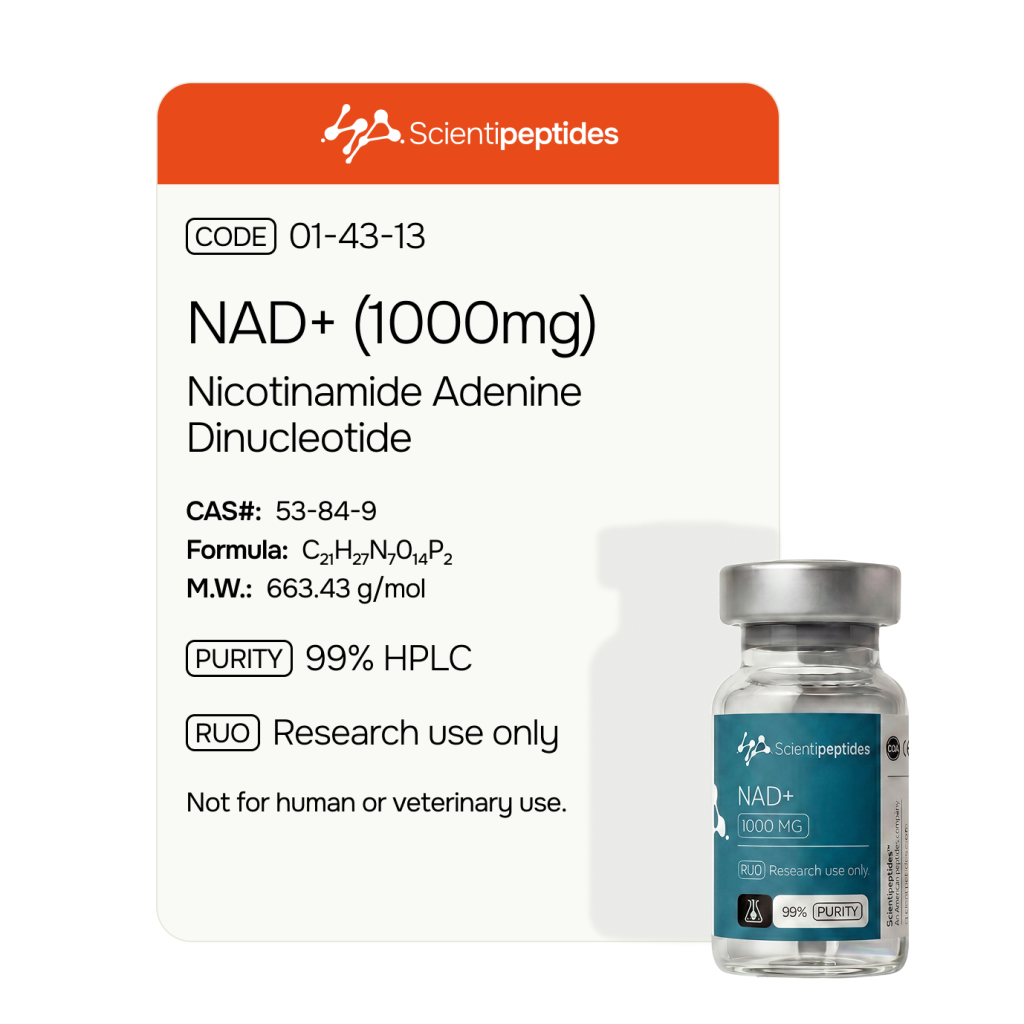
FAQs
What are Scientipeptides used for?
All Scientipeptides products are sold for research use only. They are not intended for human consumption, therapeutic, or diagnostic use. Our peptides are designed exclusively for controlled laboratory research, educational studies, or analytical testing. Every product label and supporting document clearly reflects this compliance standard.
Who is eligible to purchase peptides?
Scientipeptides products are available to qualified researchers, laboratories, and educational institutions. Purchasers must confirm the products will be used for research purposes only.
How should peptides be handled and stored?
Lyophilized peptides should be stored at -20°C and protected from light and moisture. Once reconstituted, peptides should be used promptly and stored according to the documentation included with each product.
Why do peptide vials appear nearly empty?
Lyophilized (freeze-dried) peptides often appear as a thin film or small pellet at the bottom of the vial. The milligram amount stated on the label is verified by HPLC and mass spectrometry regardless of visual volume.
Other recommended products
Our universally agreed, most-loved products.