
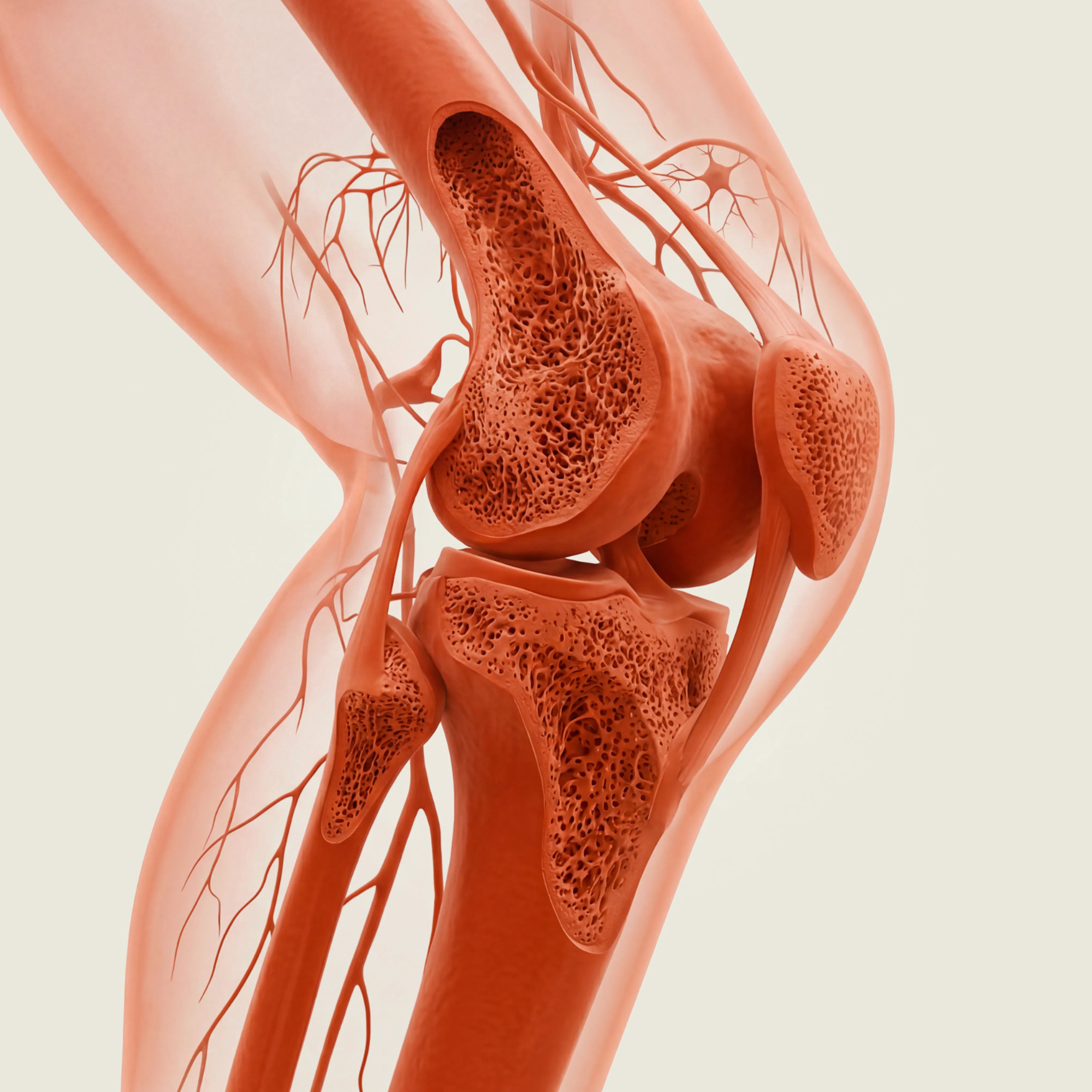
Prof. M. S. Shetty speaks on why patients develop knee pains after 65 years
Age-related changes in joint and connective tissue remain one of the most active areas of musculoskeletal research. As populations age, researchers are increasingly focused on the cellular mechanisms behind cartilage wear, reduced synovial-fluid quality, and the slower tissue-repair signalling observed in later life.
What changes in connective tissue over time
Cartilage is largely avascular, so its capacity for self-repair is limited and tends to decline with age. Research literature points to a combination of reduced extracellular-matrix turnover, accumulated oxidative stress, and changes in the signalling environment that coordinates tissue maintenance.
Where peptide research fits
Peptides studied for tissue-repair and extracellular-matrix signalling — such as TB-500 and BPC-157 — are examined in controlled laboratory models for their role in cellular migration and repair pathways. This work is exploratory and conducted strictly in research settings.
Editorial note: this article is a general research overview provided for educational purposes only and does not represent medical advice or a clinical statement by any named individual. Replace with client-reviewed editorial content before publishing.

Related articles

Leave a reply
Your email address will not be published. Required fields are marked *